

Introduction
In mould manufacturing, precision is everything. Even a minor flaw in a mould can result in thousands of defective parts, wasted materials, and costly downtime. For businesses, the stakes are high: product quality, production efficiency, and overall profitability hinge on the reliability of the mould.
This is why quality control is non-negotiable. A reputable precision mould manufacturer implements rigorous checks at every stage to ensure that each mould performs flawlessly from the first production run. In this blog, we’ll explore the critical steps involved in quality control and why they matter for your project’s success.
The Stages of Quality Control
1. Incoming Material Inspection
Quality control begins before any machining takes place. All raw materials, including high-grade steel, alloys, and other components, are inspected for hardness, composition, and surface integrity.
Checking incoming materials ensures that only defect-free and reliable materials enter the production process. This prevents future issues such as warping, cracking, or premature wear, which could compromise the final product.
2. Machining and EDM Process Checks
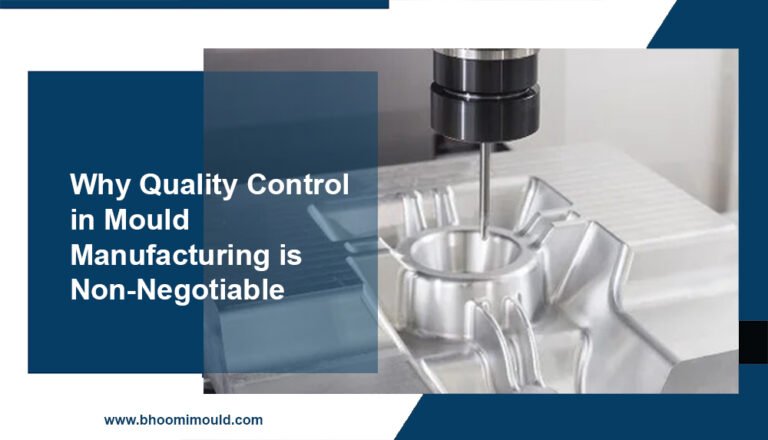
Once production begins, in-process quality checks are crucial. During CNC machining and Electrical Discharge Machining (EDM), measurements are continuously monitored to maintain precision.
This includes verifying cavity dimensions, surface finishes, and tolerances at multiple stages. By catching potential deviations early, the manufacturer prevents errors from propagating, ensuring that every part of the mould aligns perfectly with the design specifications.
3. Final Inspection and Testing
Before delivery, the mould undergoes a comprehensive final inspection. This step includes:
- Dimensional verification: Ensuring all cavities and features match the CAD design.
- Cavity checks: Confirming uniformity and smooth operation across all cavities.
- Test runs: Producing sample parts to validate the mould’s performance under real production conditions.
Final testing guarantees that the mould produces high-quality, defect-free parts consistently and is ready for immediate use in production.
The Benefits of Strict Quality Control
Consistent Part Quality
A mould built with strict quality control produces identical parts with precise dimensions and flawless finishes. Consistency in production minimizes rejections and strengthens your product’s reputation for quality.
Reduced Production Costs
Investing in a quality mould upfront reduces downtime, maintenance costs, and material waste. Avoiding repairs or replacements in the middle of a production run saves significant time and money.
Faster Time-to-Market
A mould that works correctly from the first run allows production to begin immediately, eliminating delays caused by troubleshooting defects. This means faster delivery of your products to market and a competitive advantage for your business.
Our Company’s Commitment to Quality
At Bhoomi Mould, quality is at the core of everything we do. Our Bhoomi Mould Lifetime Service ensures that clients receive ongoing support, maintenance, and expert guidance, giving peace of mind that their investment is protected for years to come.
From material selection to final testing, every mould we manufacture undergoes rigorous quality checks to guarantee superior performance and reliability. Our commitment to excellence makes us a trusted partner for businesses seeking precision moulds that deliver consistent results.
Conclusion and Call-to-Action
Quality control is the cornerstone of successful mould manufacturing. By carefully inspecting materials, monitoring production, and performing final testing, manufacturers can ensure defect-free, high-performing moulds that save time, reduce costs, and improve product consistency.
For your next project, don’t compromise on quality. Partner with a manufacturer that prioritizes rigorous quality control and delivers reliable, precision moulds every time.
Ready to ensure your next project is a success from the start? Contact our quality-driven team today for a consultation.